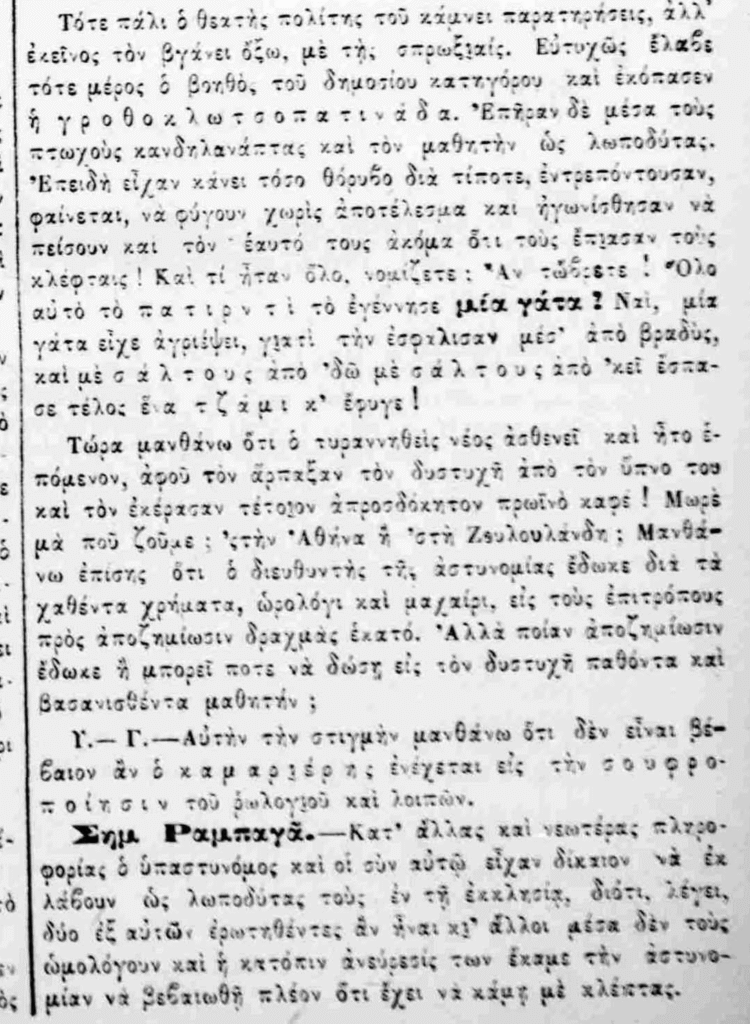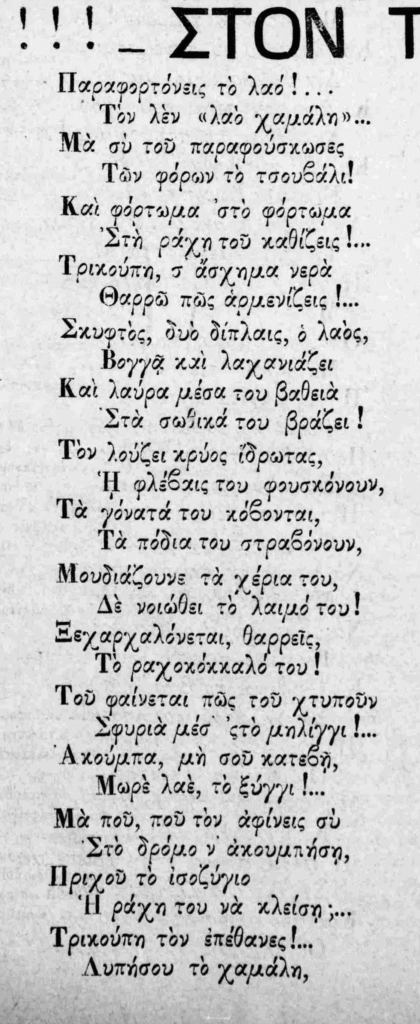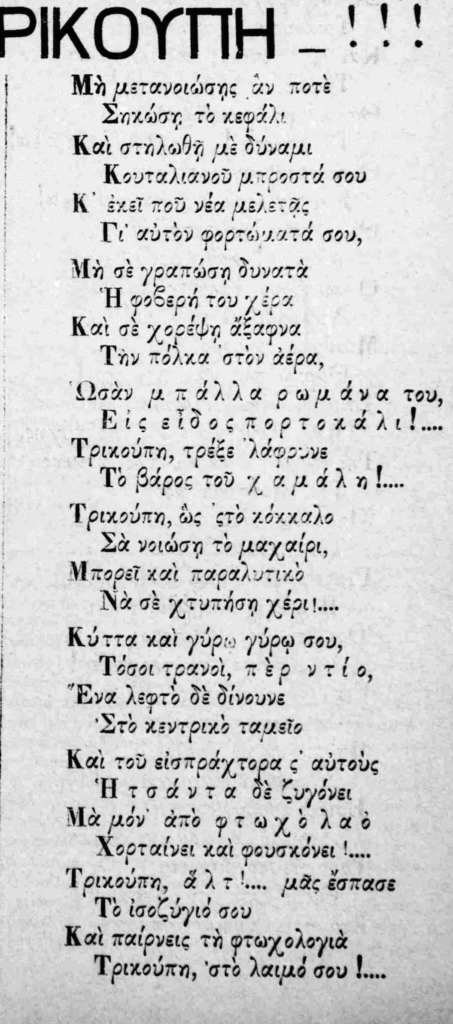

Information from a satirical publication
“Letting go gives us freedom, and freedom is the only condition for happiness.”
― Jay Shetty, Think Like a Monk: Train Your Mind for Peace and Purpose Every Day
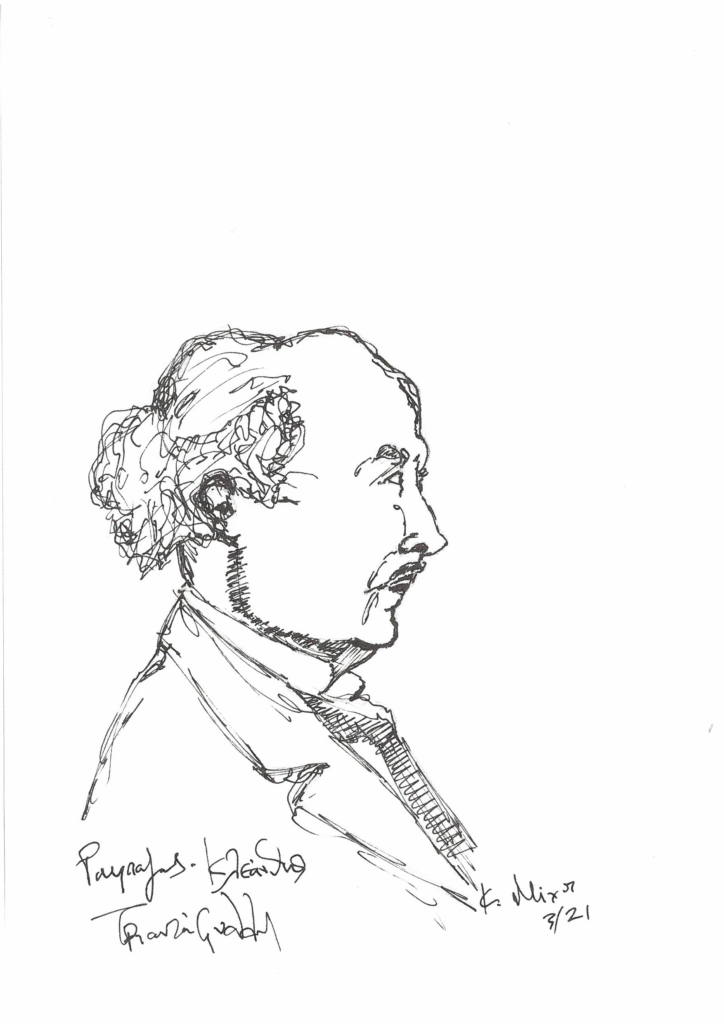
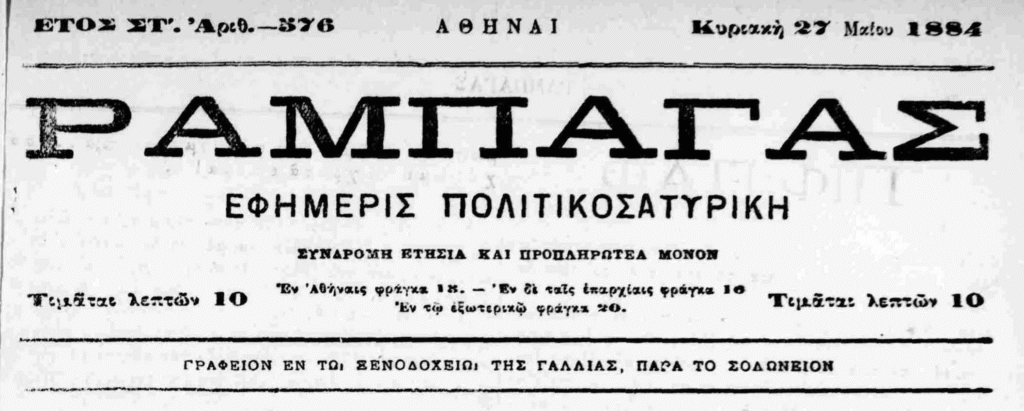
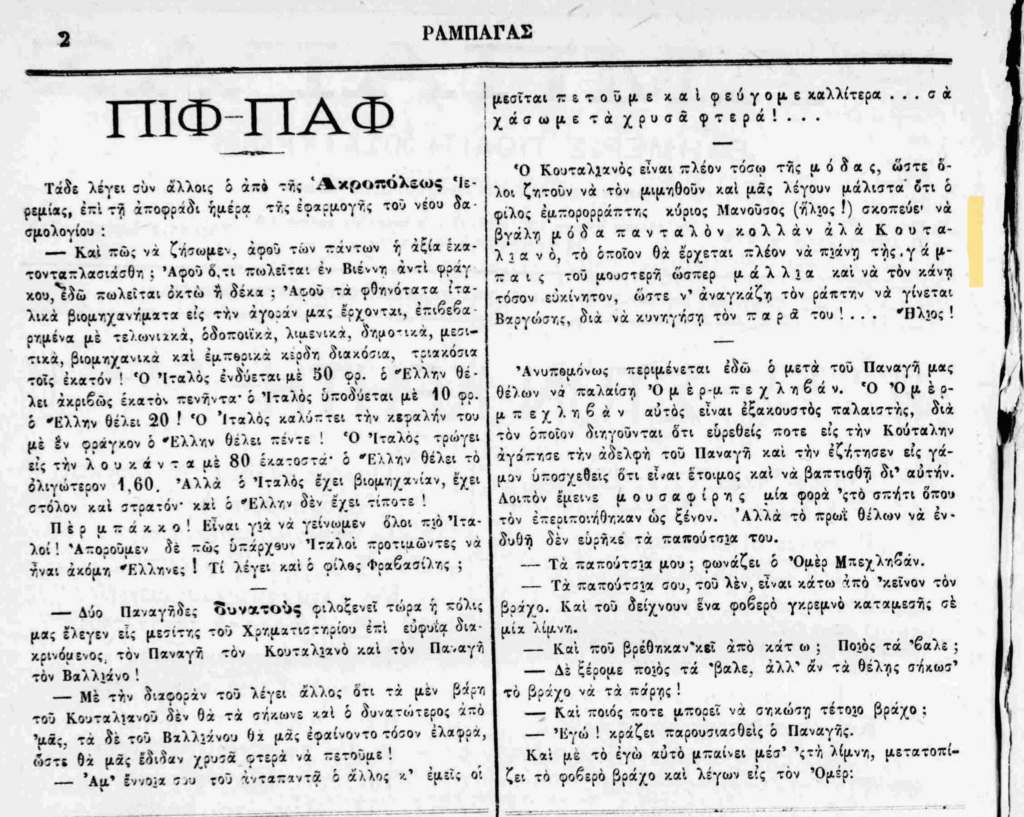
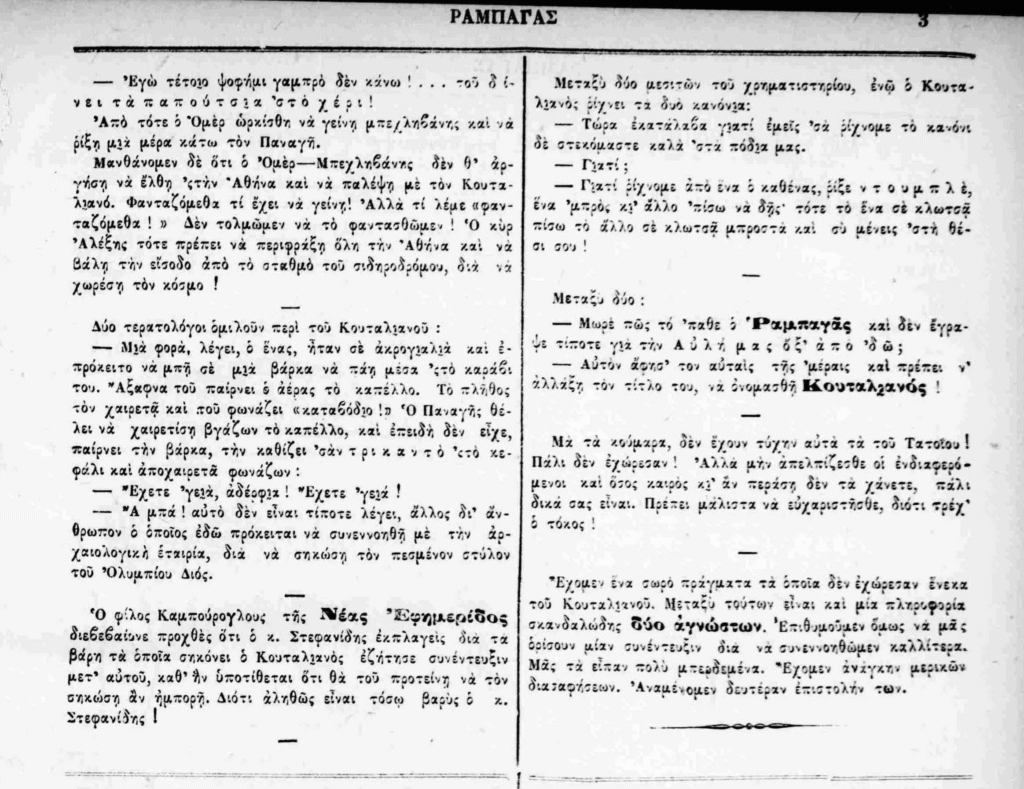
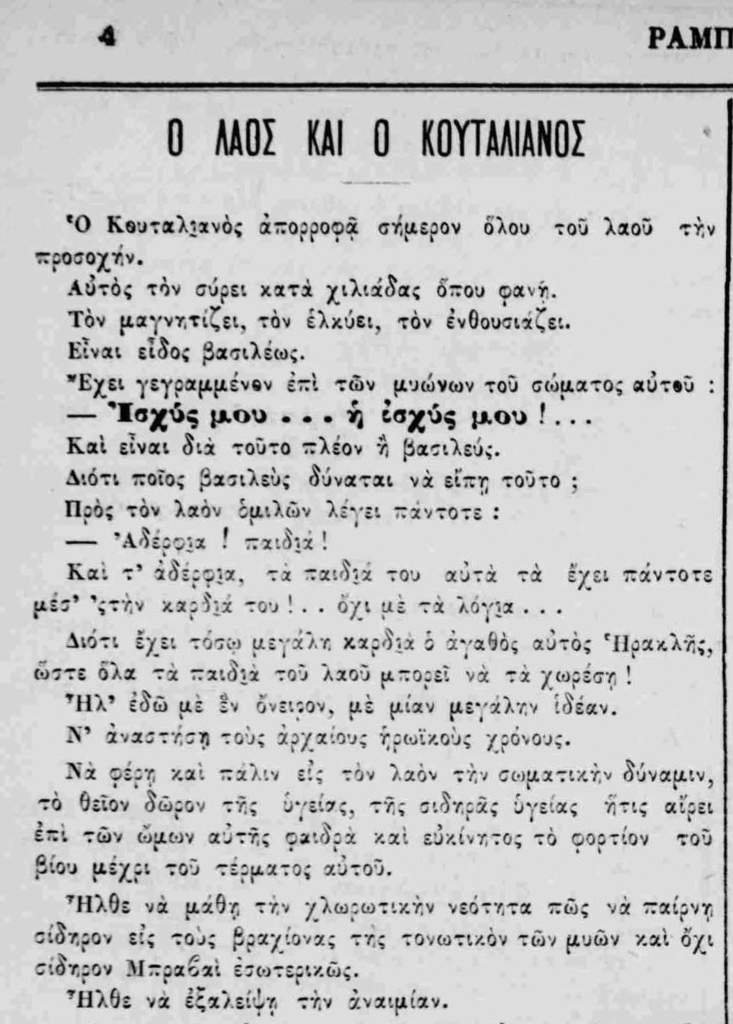
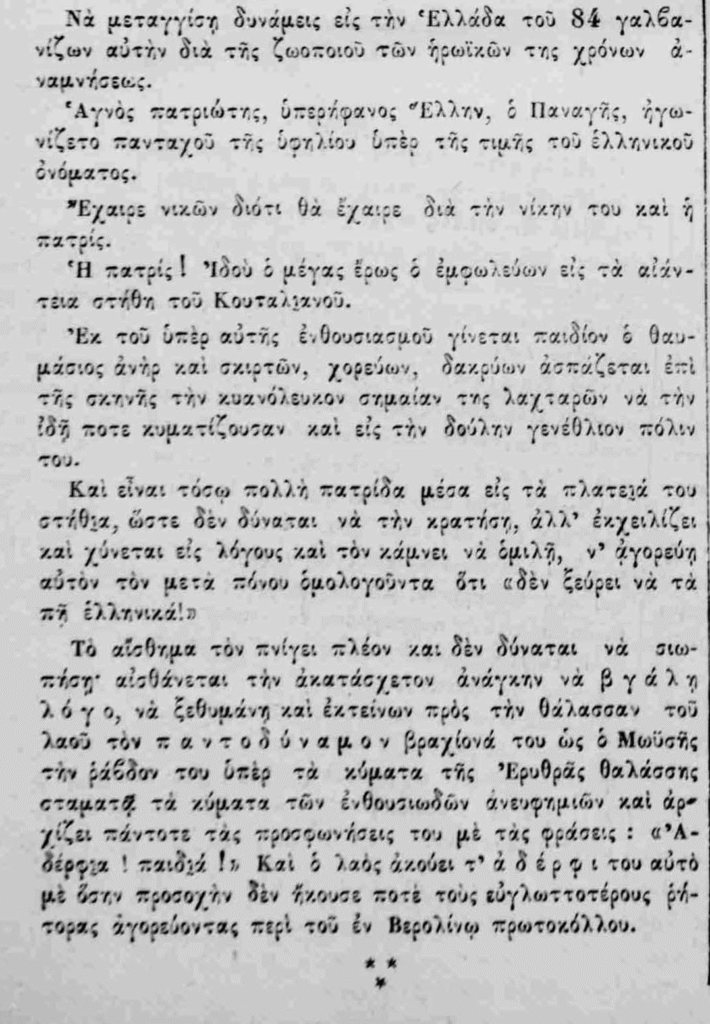
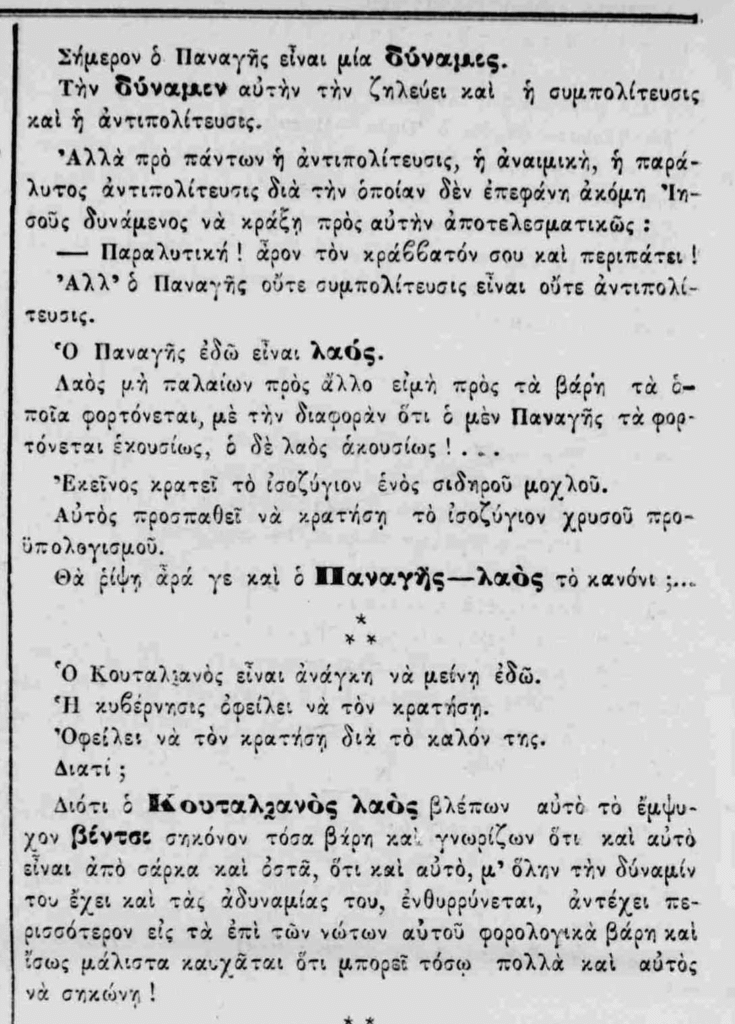
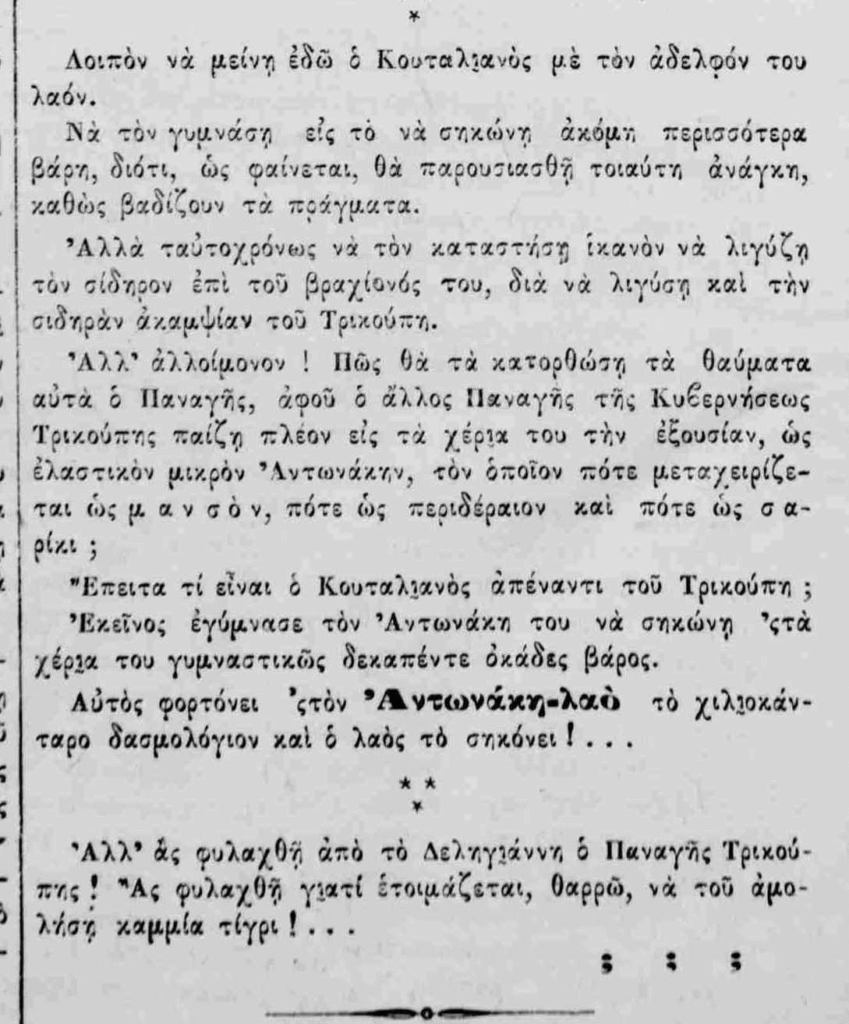
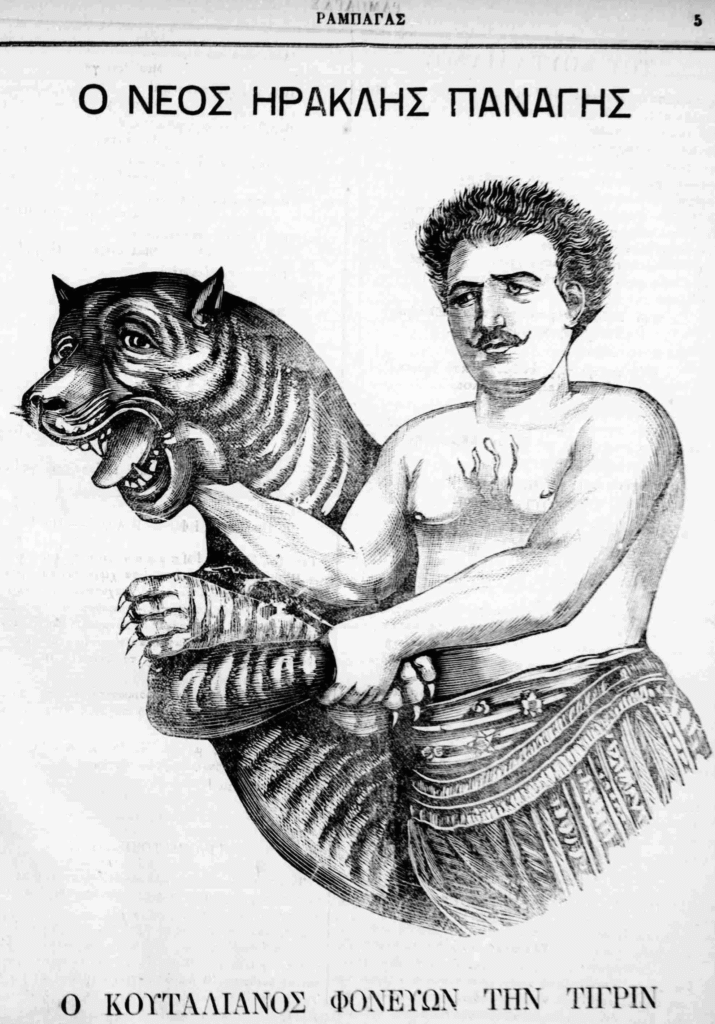
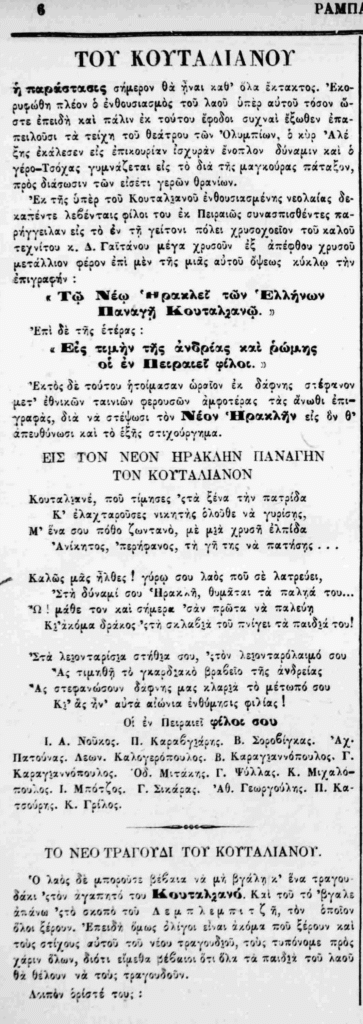
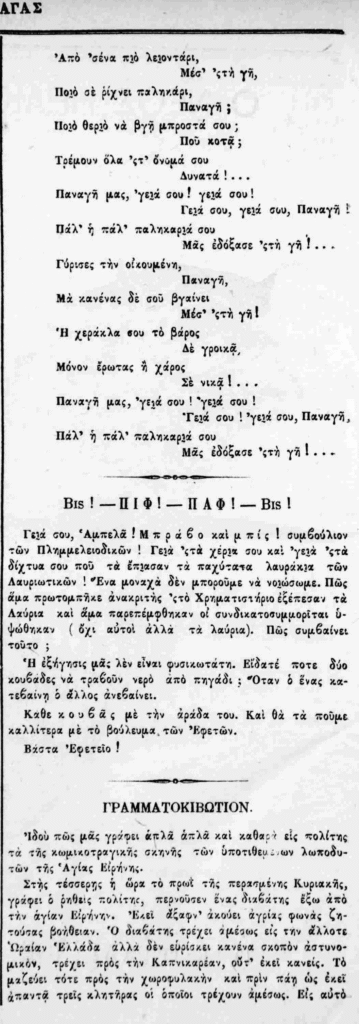
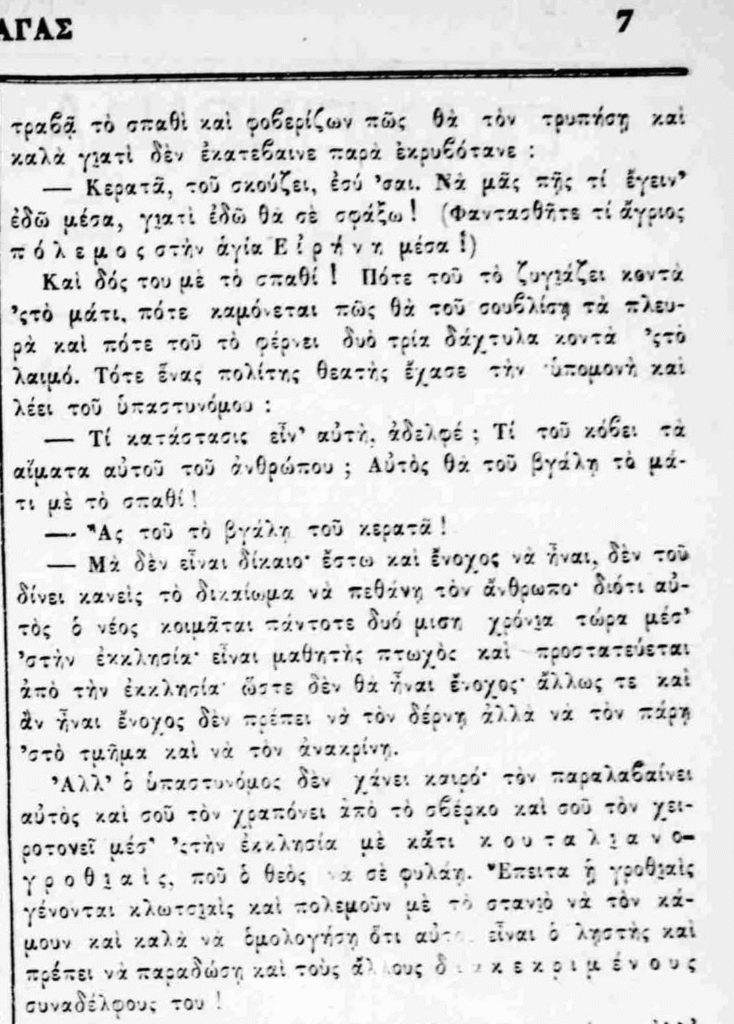
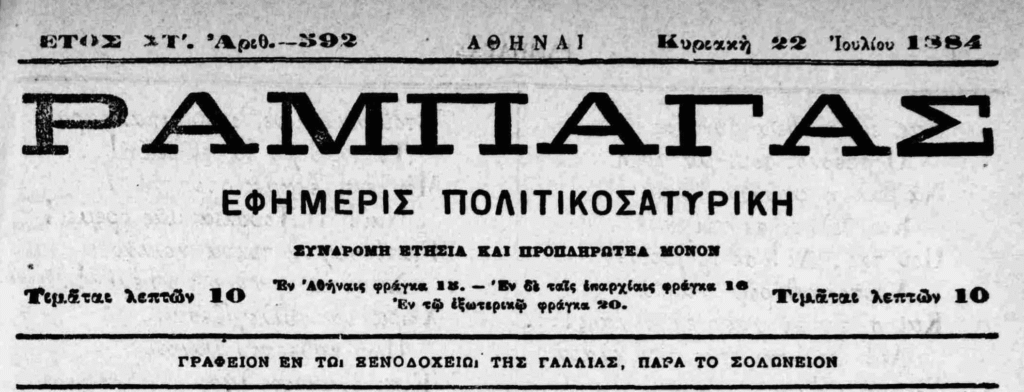
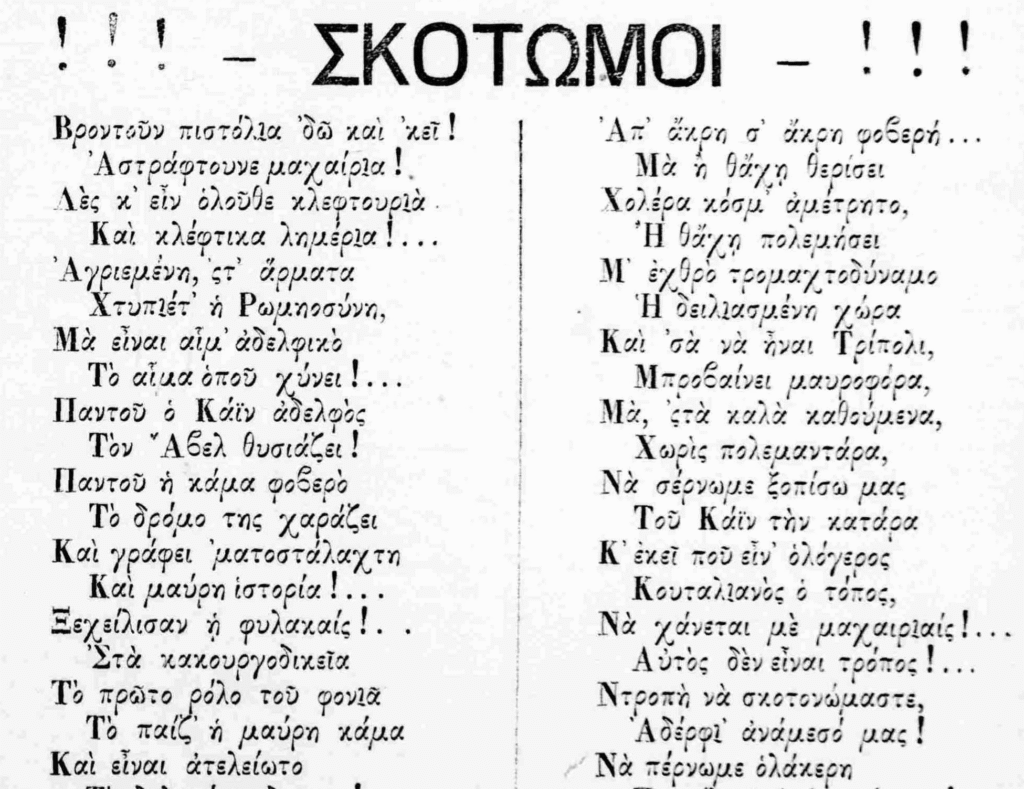
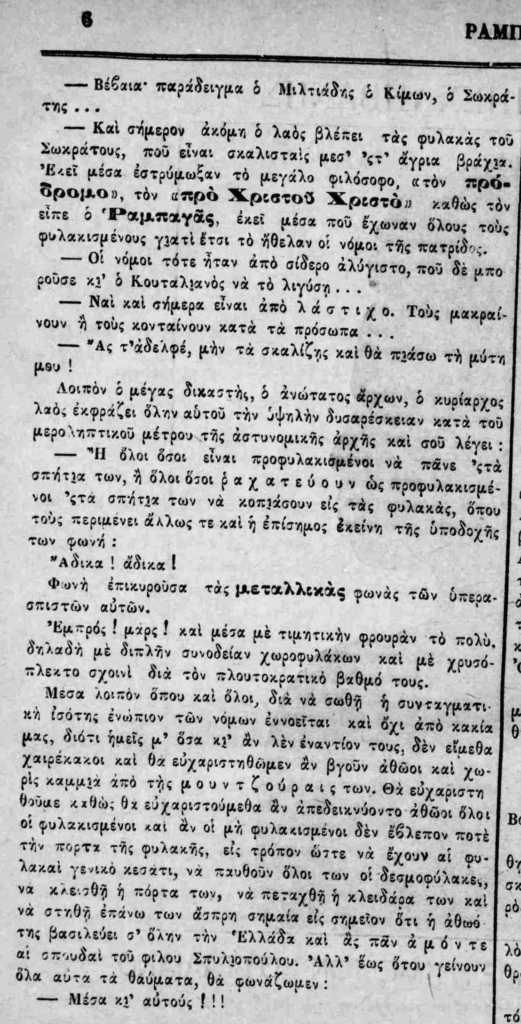
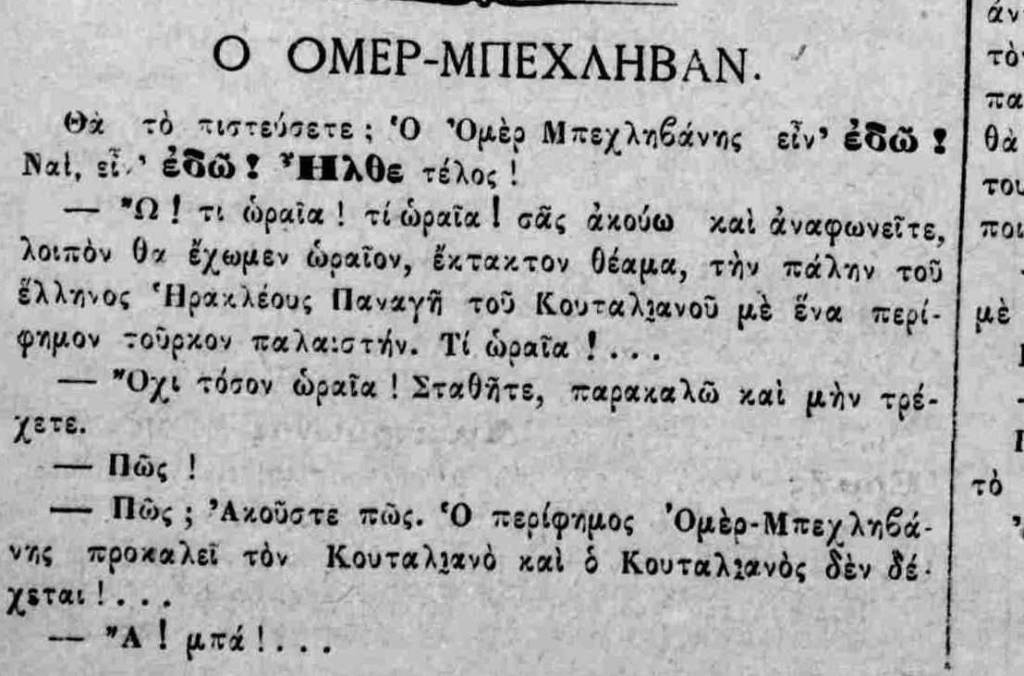
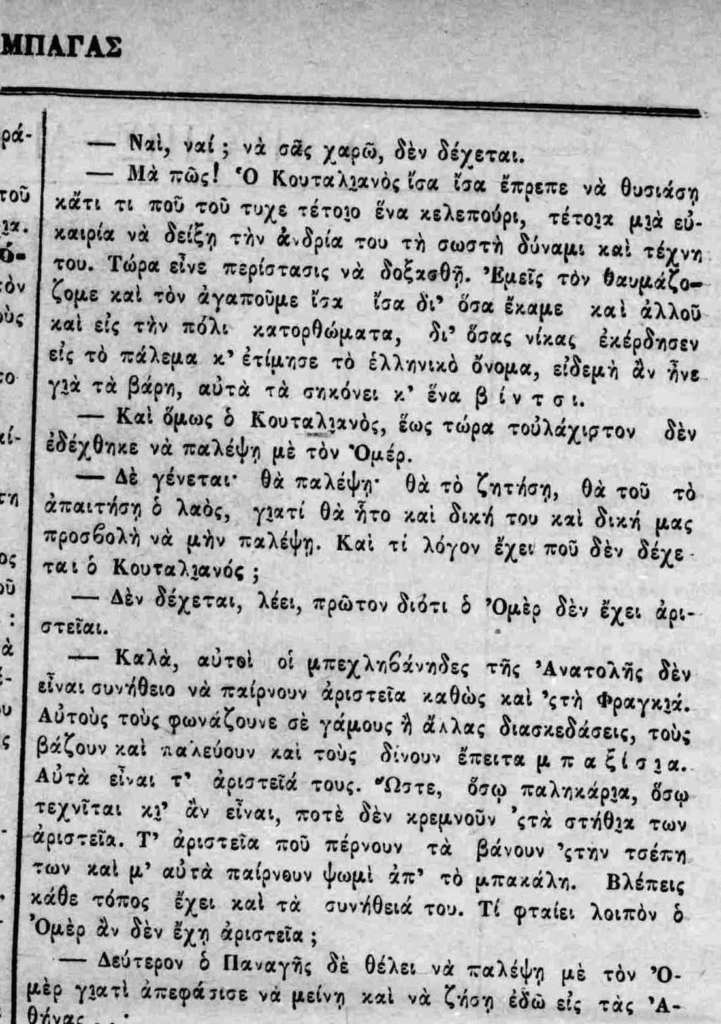
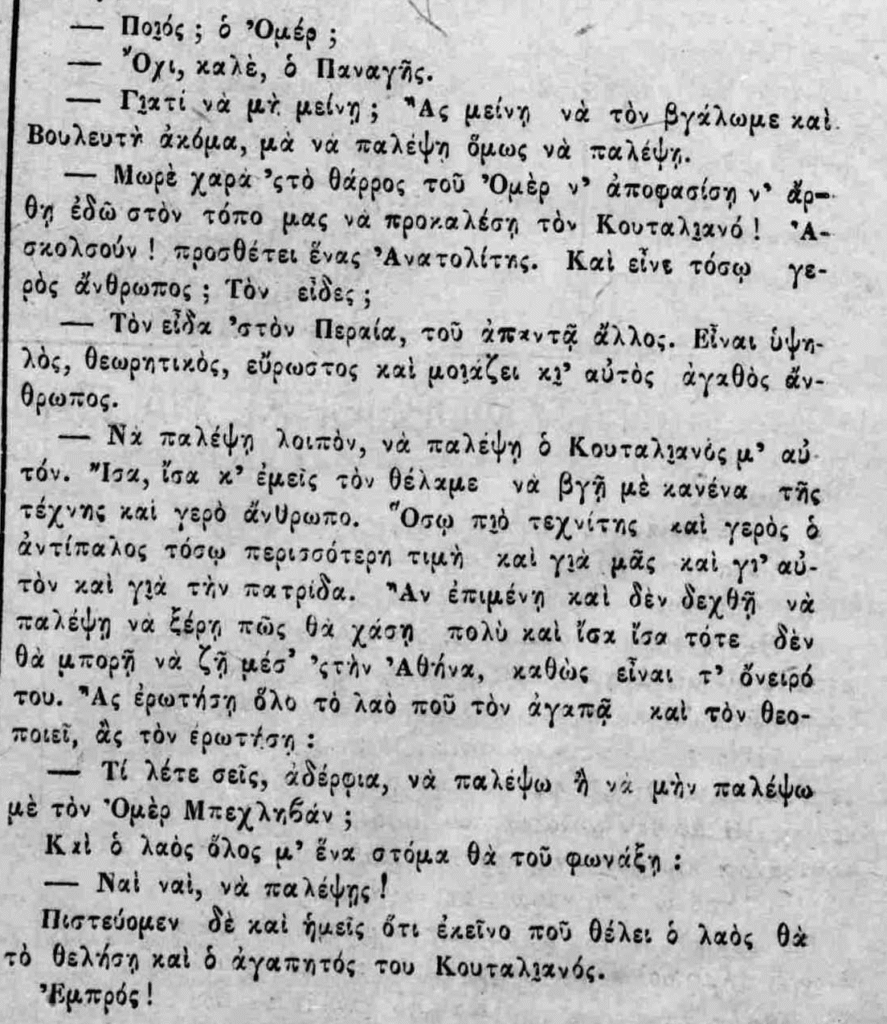
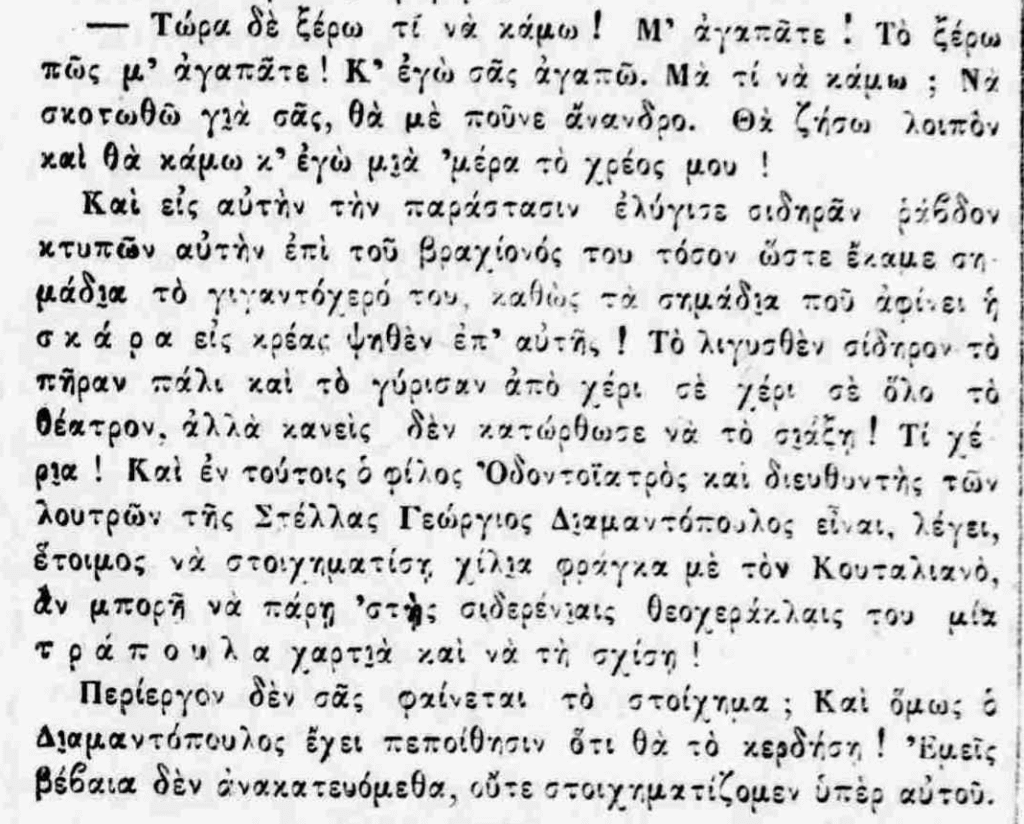
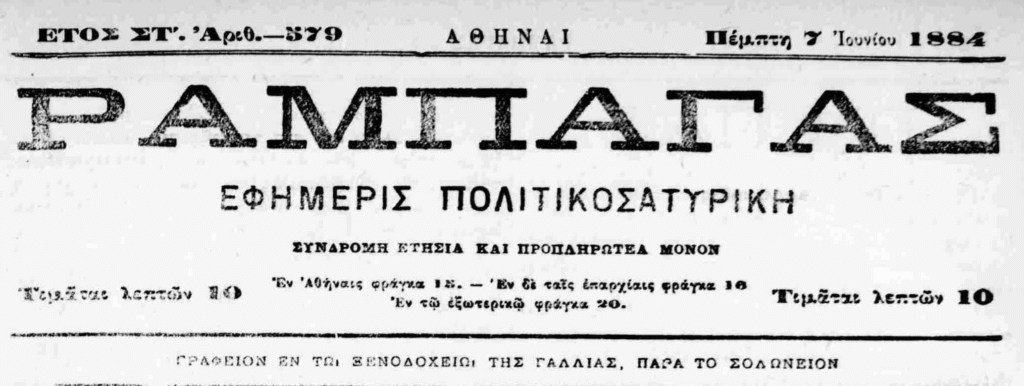
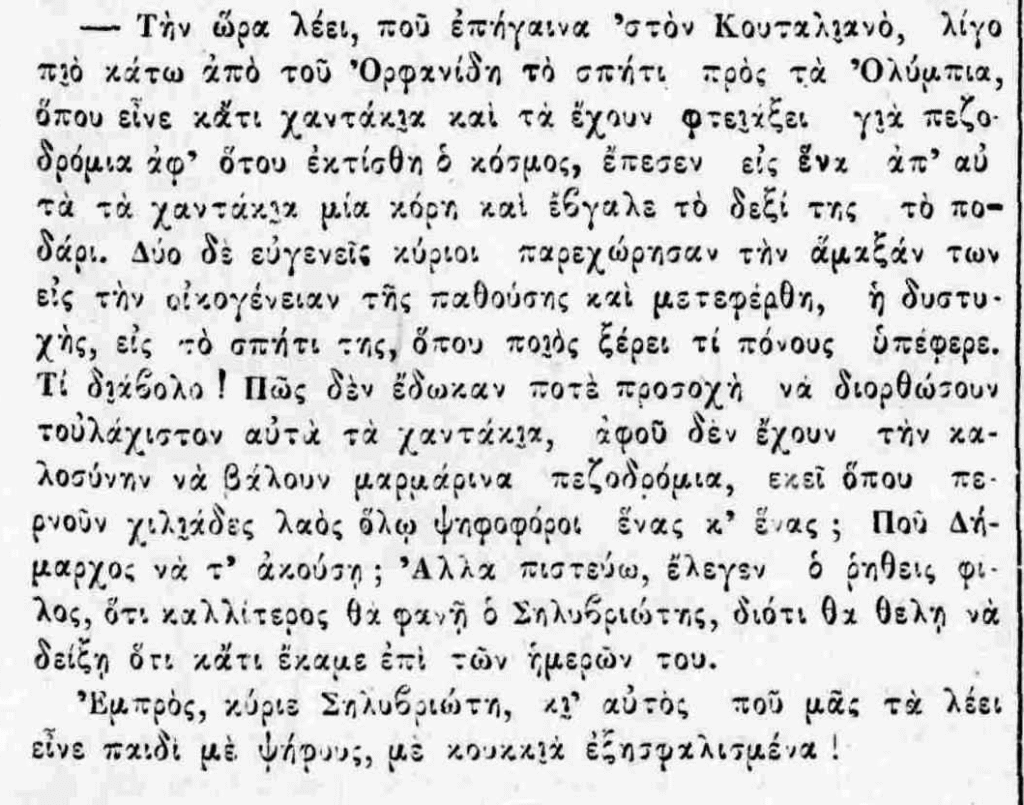
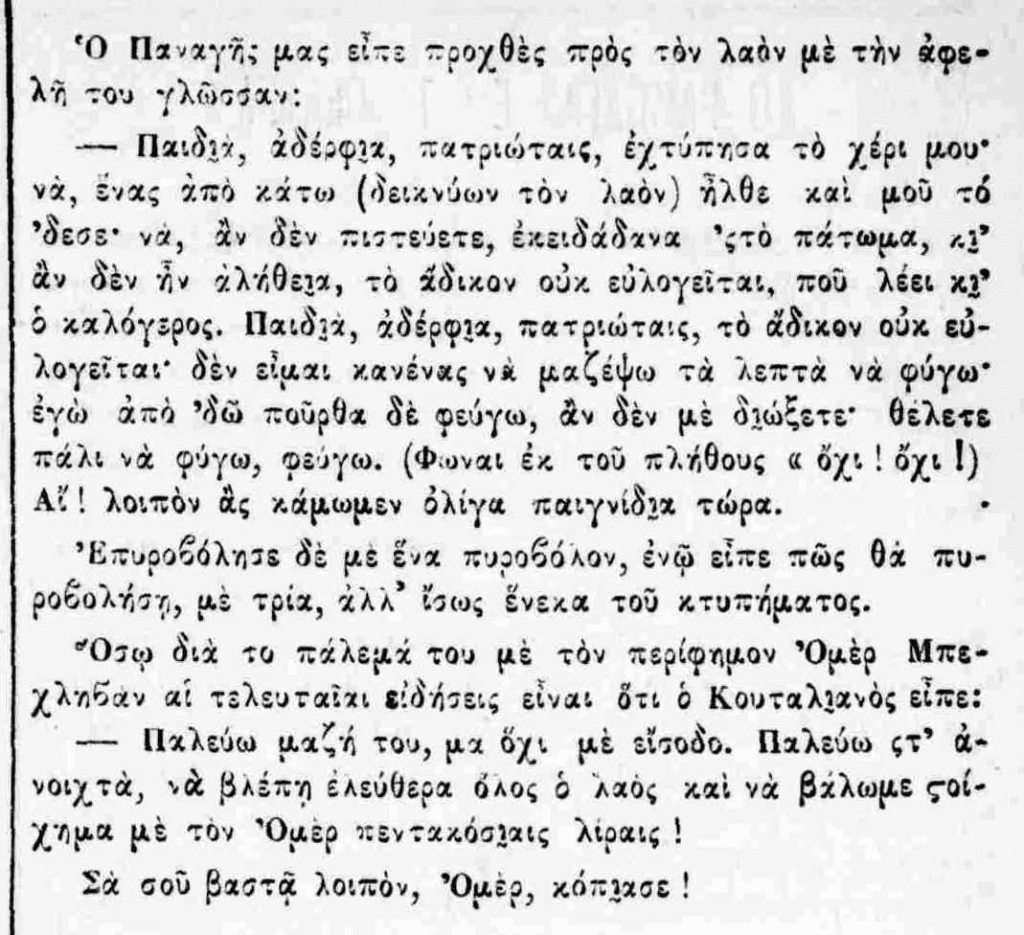
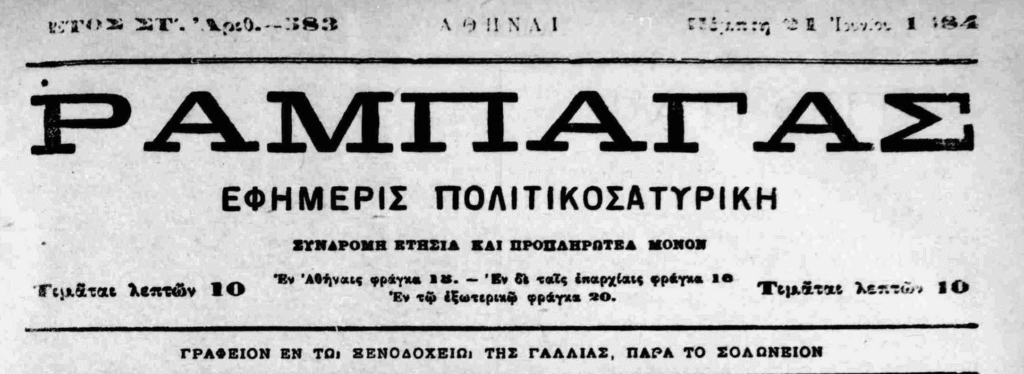
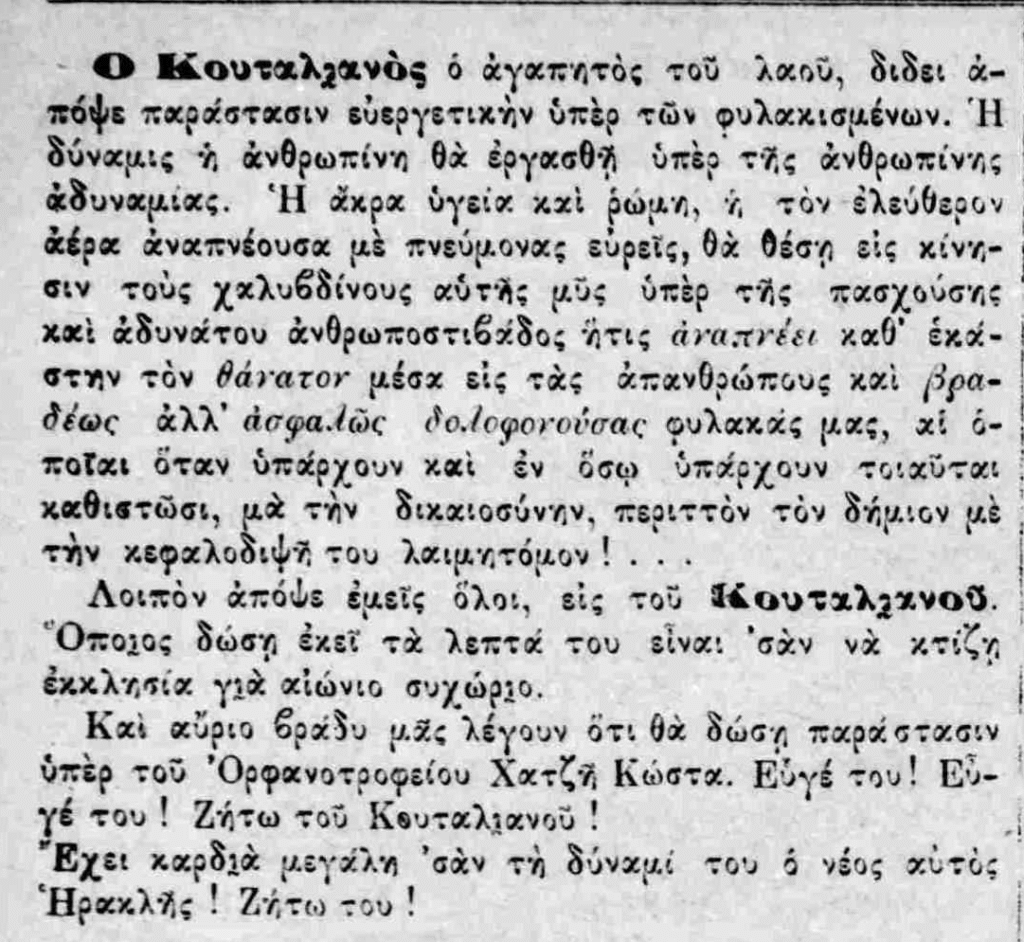
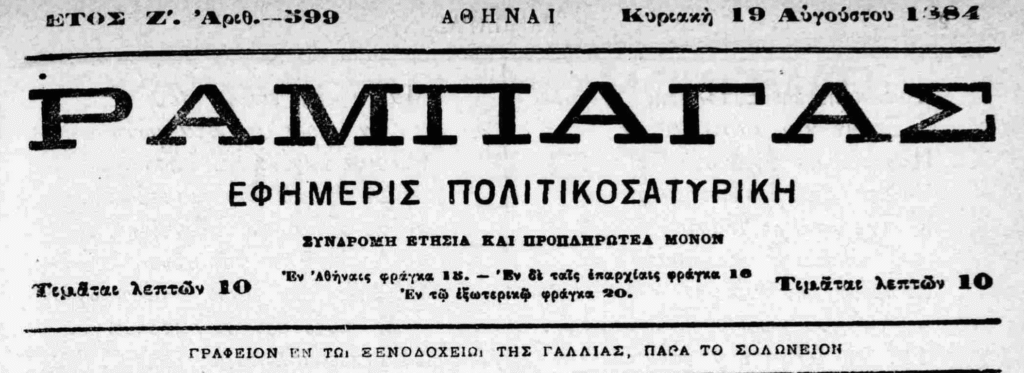
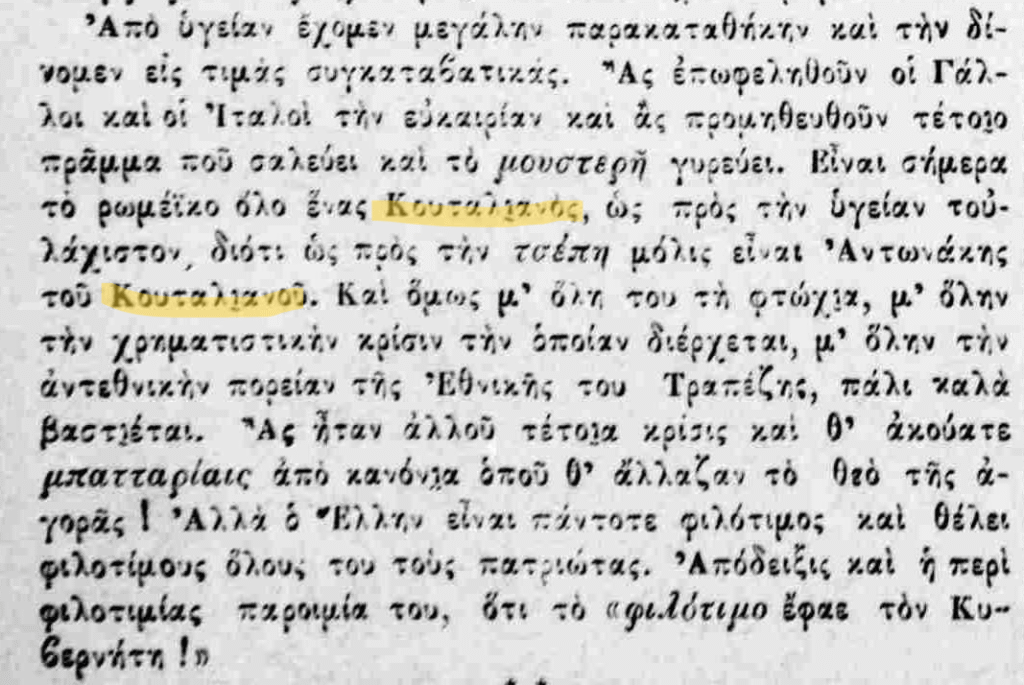
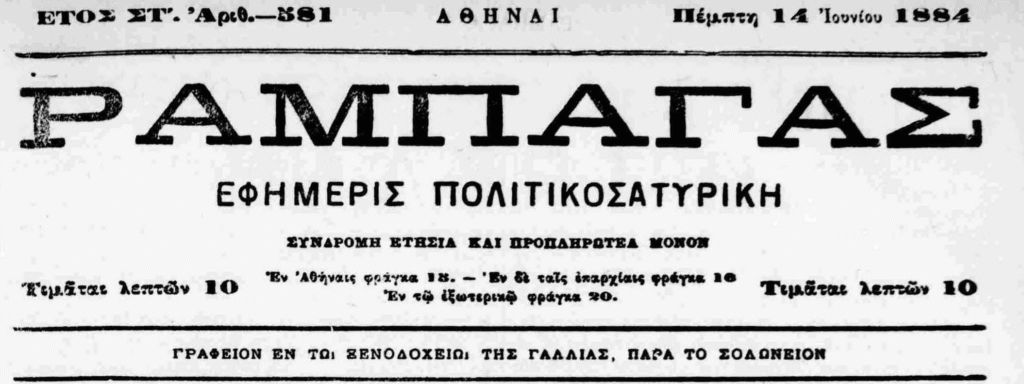
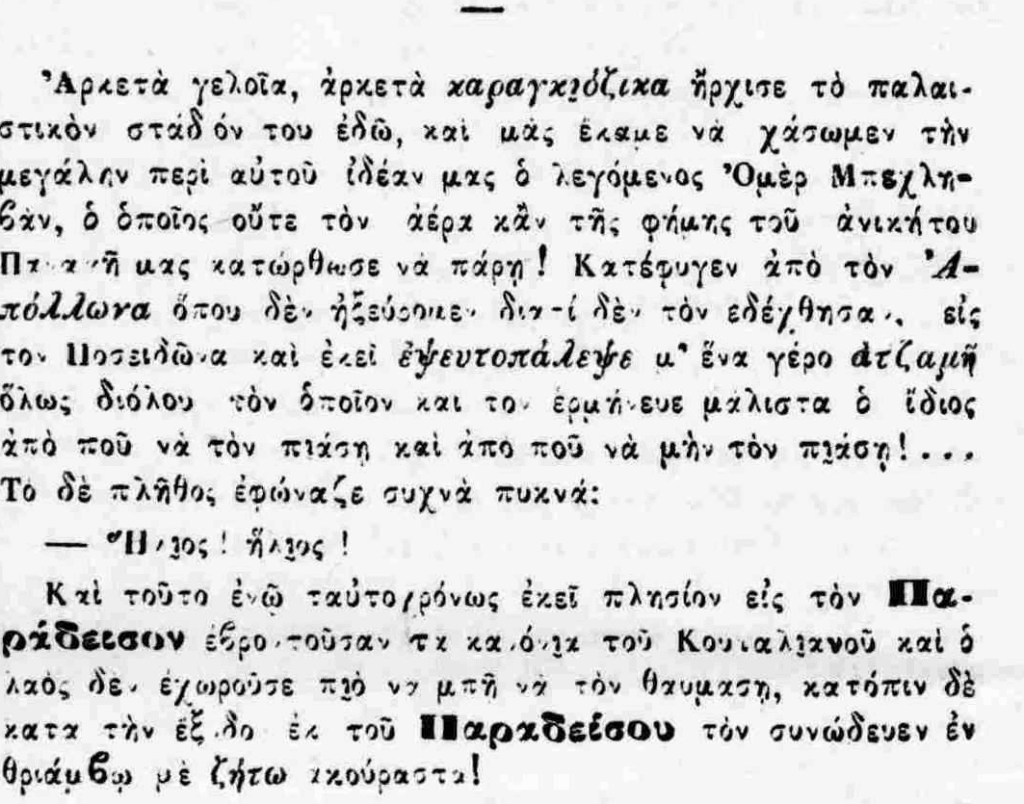
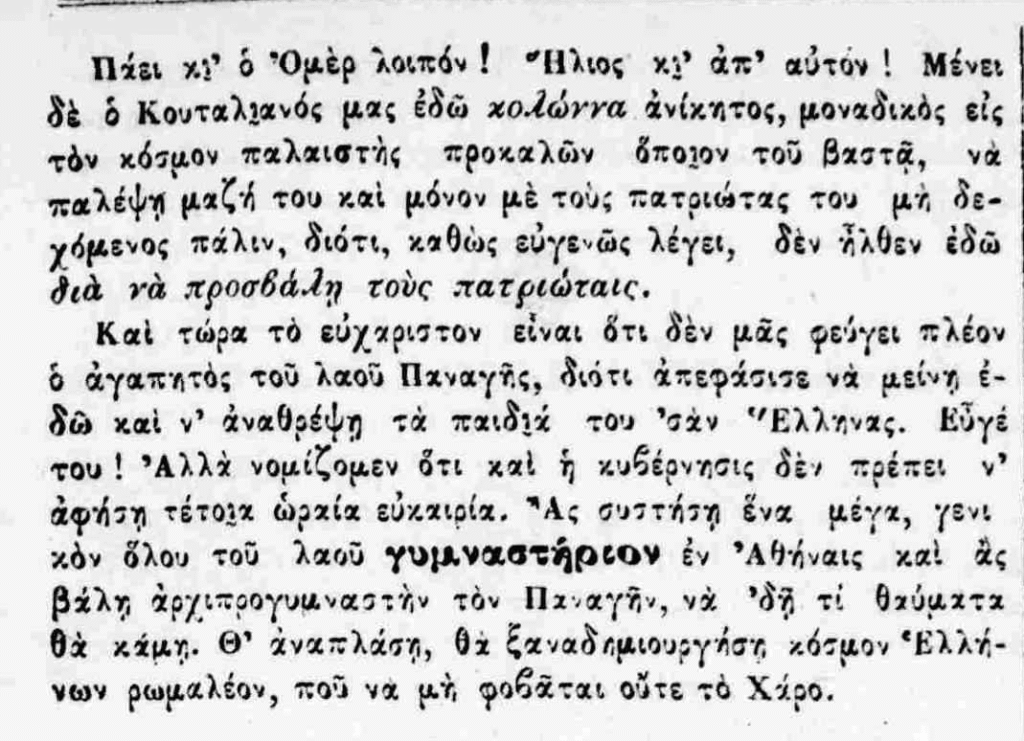
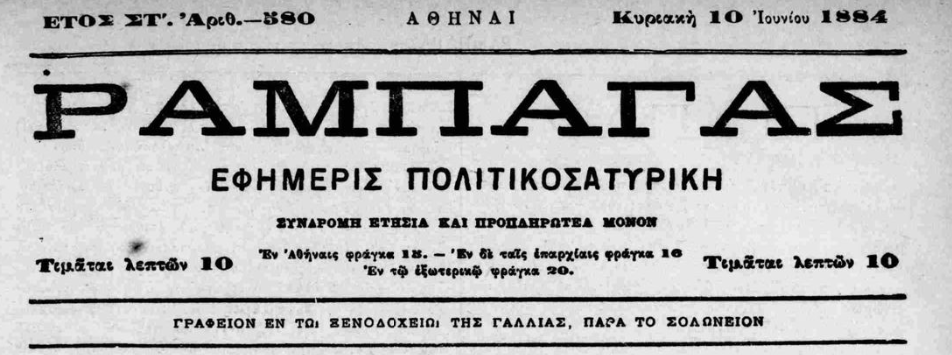
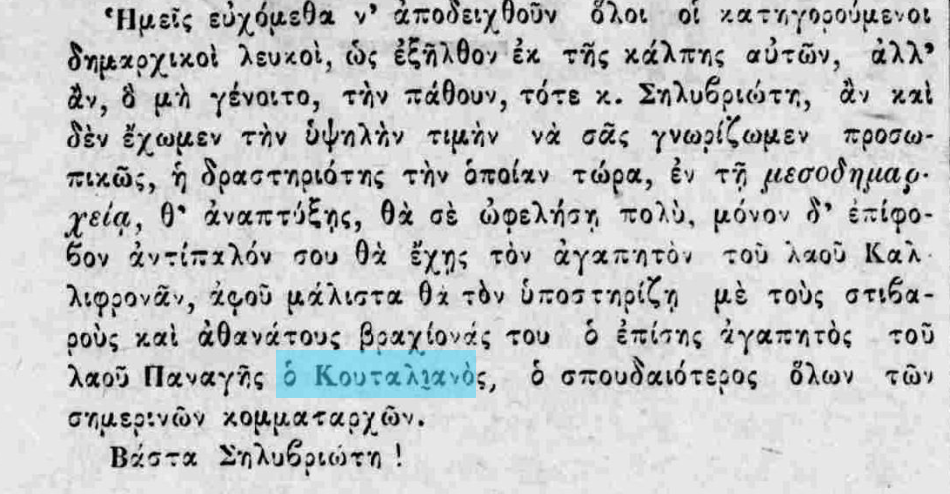
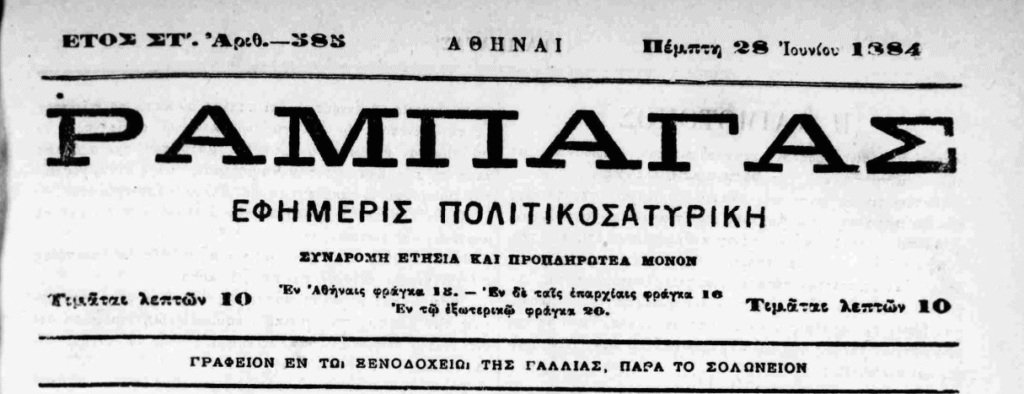
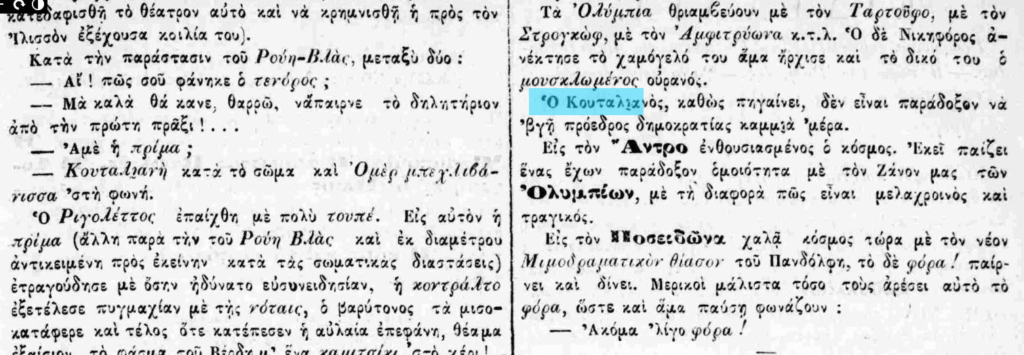
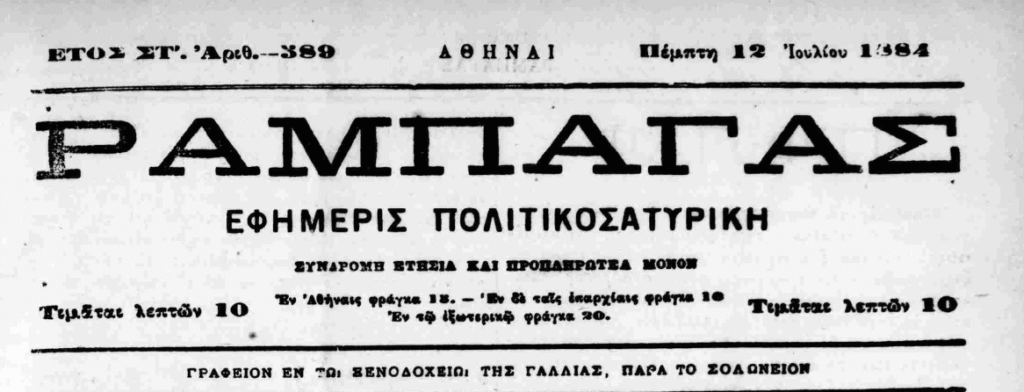
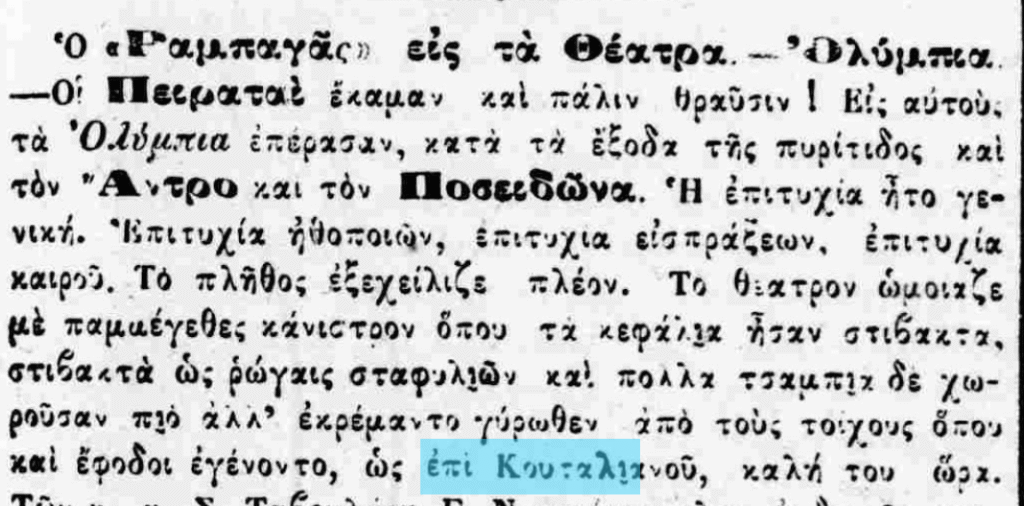
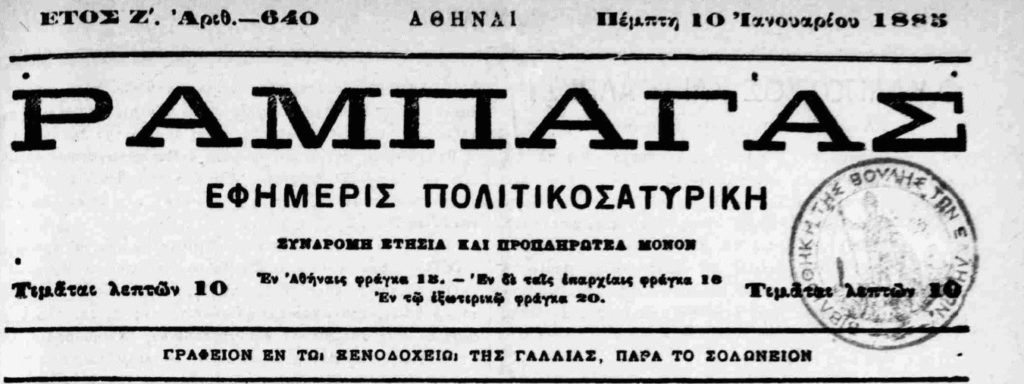
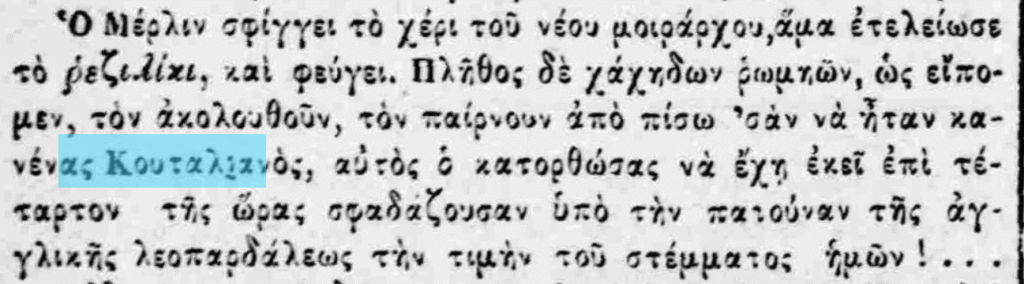
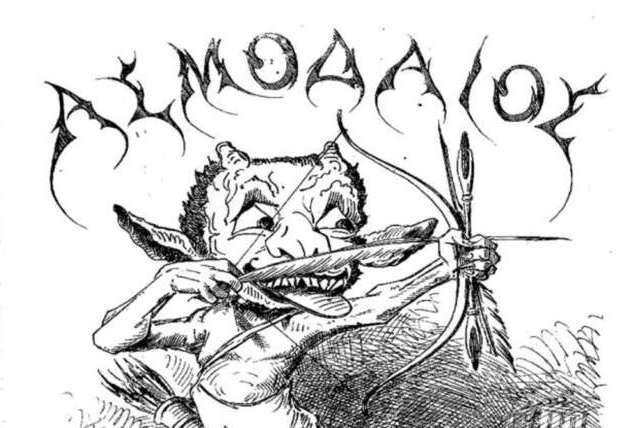
The newspaper titled “Rambagas” was published by the 19th-century Greek satirical poet and journalist Kleanthis Triantafyllos (1850 – May 25, 1889). Kleanthis Triantafyllos was born in Apollonia, Sifnos, in 1850. He studied to be a teacher, like his father, and was appointed to Andros. There he learned French and translated French poems, such as Lamartine’s Despair. He then went to Constantinople, where he collaborated with the publications Neologos, Koudounatos, Salpix and Diogenis. There he also published a poetry collection anonymously. Due to his caustic style, he was persecuted by the Ottoman authorities and fled to Athens. In 1878, together with Vlasis Gabrielides, he founded the progressive political and satirical magazine Rabagas, based on the comedy of the same name by Victorien Sardou, which had then been translated by Ioannis Kambouroglou, but had been banned by the Koumoundouros government.From the name of the magazine, Kleanthis Triantafyllos became known by the pseudonym “Rambagas”. The magazine caused reactions and led to the imprisonment of its editors. It continued its publication, however, even after the departure of Gabrielides, in 1880. In 1881 he was the victim of an assassination attempt. After an eight-month hiatus due to financial problems, in 1887 he continued publishing Rabagas in collaboration with Rocco Hoidas. Hoidas published two articles that were considered insulting to the king, and for this both were imprisoned. He was released after six months, and on 25 May 1889 Triantafyllos committed suicide.[1] In the last years of his life he suffered from a serious mental disorder. Poets such as Kostis Palamas, Georgios Drosinis and Nikos Kampas collaborated with Rabagas, and thus the magazine became a precursor to the New Athenian School. Kleanthis Triantafyllos’ contribution to literature is found in the satirical poems he published in his magazine, as well as in the translations of poems by Veranzeros. In this section we will present what the newspaper “Rambagas” wrote about our beloved hero Coutalianos.